Small Business Financial Reports Explained
Balance Sheet for Small Businesses
A balance sheet shows what a business owns, what it owes, and the owner’s equity at a specific date.

A financial snapshot
What a Balance Sheet Shows
Unlike a profit and loss statement, which covers activity over a period, a balance sheet reports financial position at one date. It organizes the business into assets, liabilities, and equity.
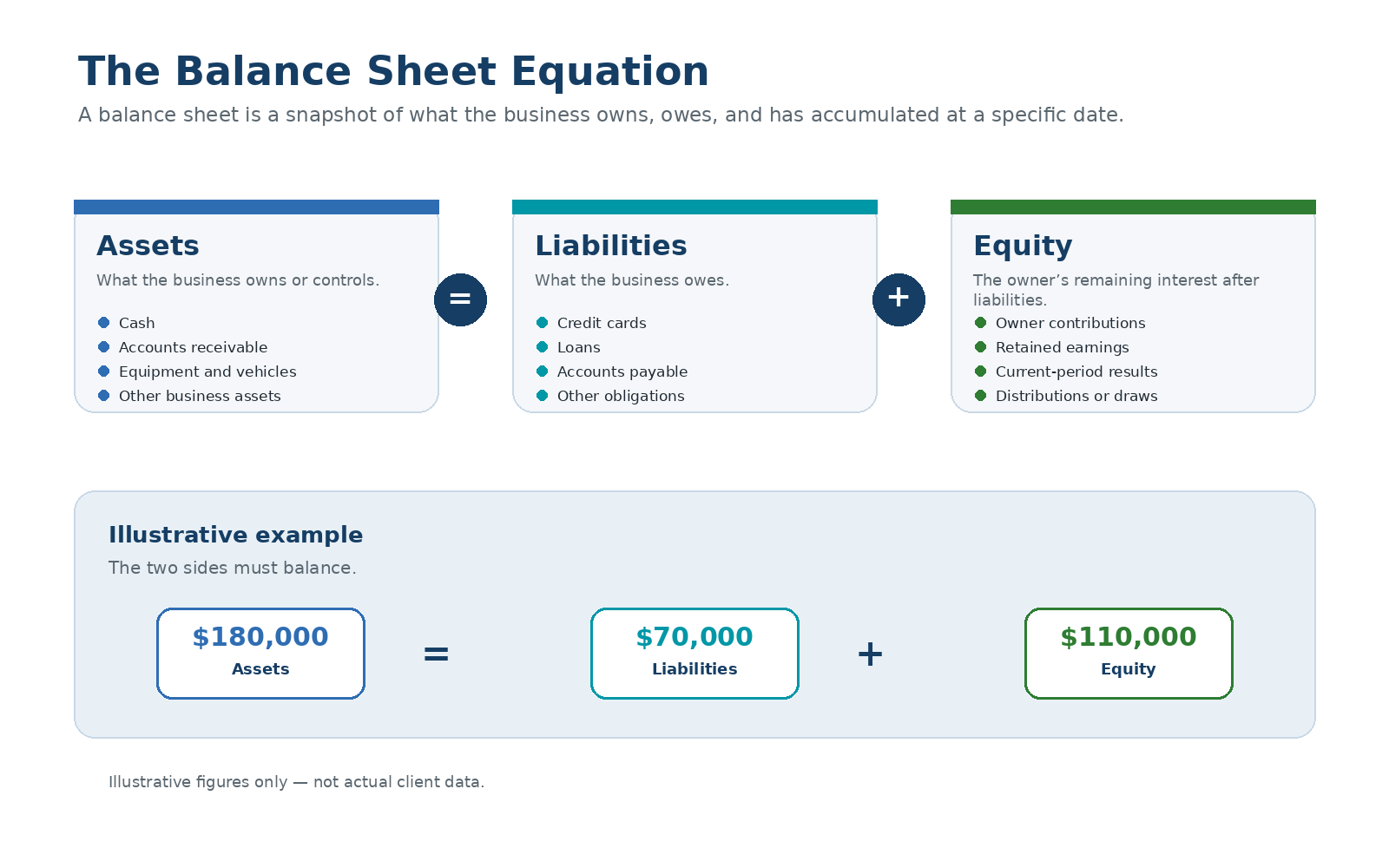
The three major sections
Assets, Liabilities, and Equity
Assets may include cash, receivables, equipment, vehicles, inventory, and other resources.
Liabilities may include credit cards, loans, accounts payable, and other obligations.
Equity represents the remaining interest after liabilities are subtracted from assets.
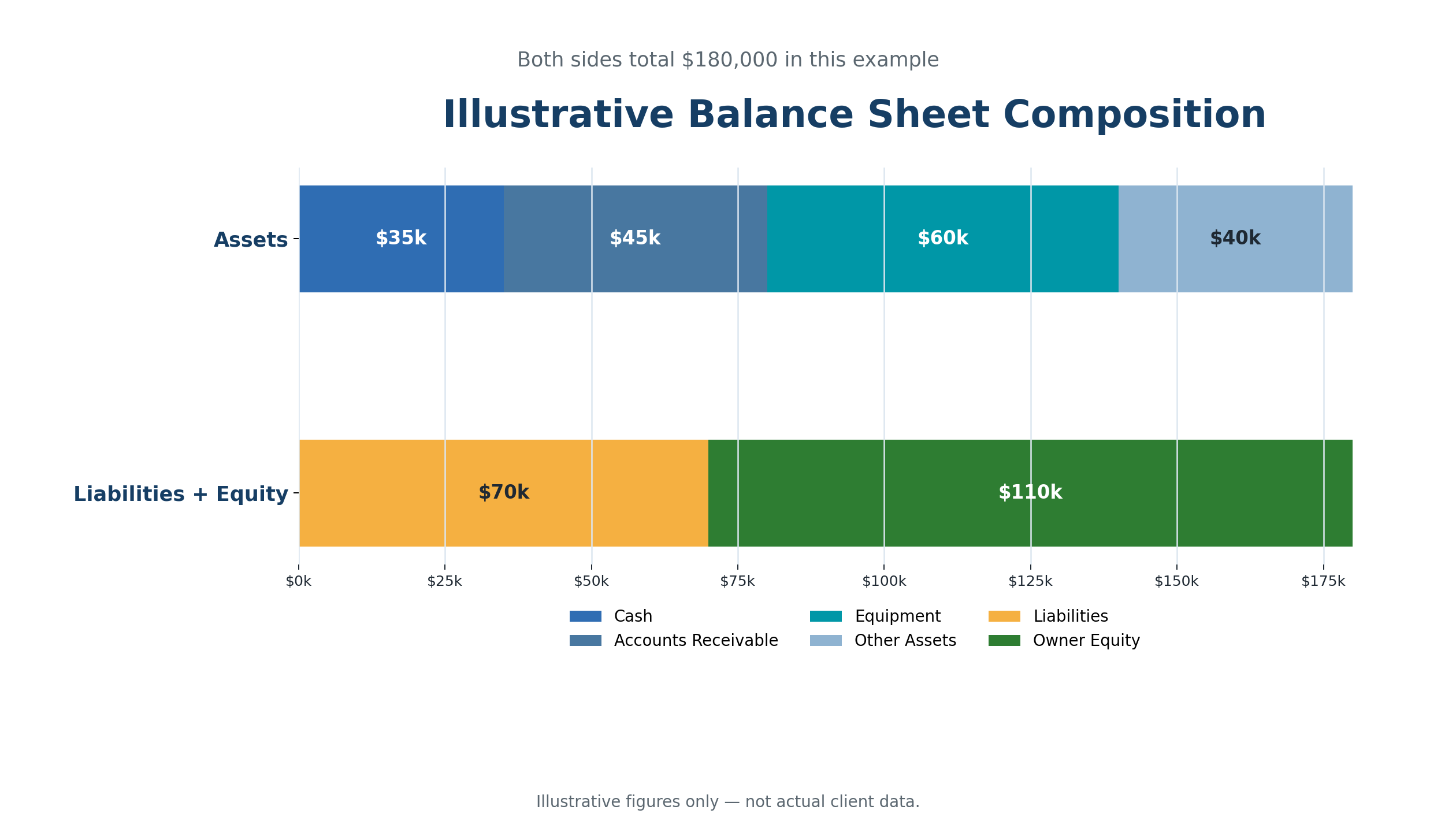
Why owners review it
What a Balance Sheet Can Help You Review
Cash and Receivables
Review recorded cash balances and amounts customers may owe.
Debt and Obligations
See loans, credit cards, and other recorded liabilities in one place.
Owner Equity
Review how contributions, retained results, and distributions affect equity.
Changes Over Time
Compare month-end or year-end positions and investigate unexpected movements.

The report is only as reliable as the records
Balance Sheet Reliability Starts With Bookkeeping
Unreconciled accounts, duplicate transactions, old unsupported balances, incorrect loan activity, and misclassified owner transactions can make a balance sheet difficult to trust.
Cleanup may change the balance sheet because the underlying records become more accurate.
Common warning signs
Use the reports together
Balance Sheet vs. Profit and Loss Statement
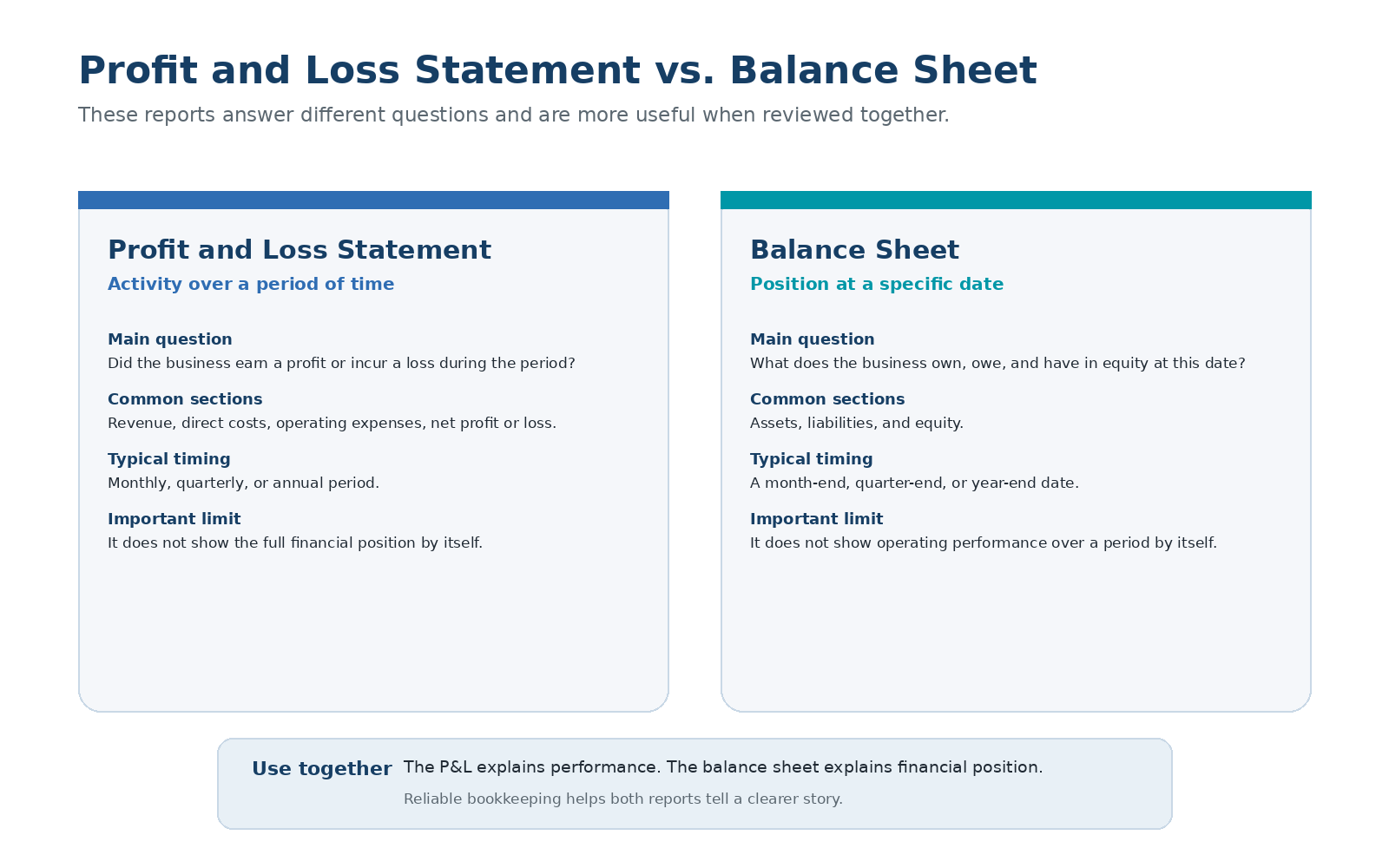
The P&L explains operating activity over a period. The balance sheet explains financial position at a date. Read the Profit and Loss Statement explainer.
Common questions
Questions Business Owners Ask About Balance Sheets
Why does my balance sheet not match my bank balance?
The balance sheet includes more than cash. It can also contain receivables, equipment, loans, credit cards, payables, and equity accounts. The bank balance is only one part of the report.
Why are old balances still showing?
Old balances may remain because transactions were not reconciled, opening balances were entered incorrectly, items were duplicated, or supporting records are missing. They should be reviewed rather than removed without support.
What does negative equity mean?
Negative equity generally means recorded liabilities exceed recorded assets at that date. It can have several causes, so the books and supporting records should be reviewed before drawing conclusions.
Why might my balance sheet change after cleanup?
Cleanup may correct unreconciled accounts, duplicates, loan activity, owner transactions, and unsupported balances. Those corrections can change assets, liabilities, and equity.
How This Connects to Bookkeeping and Tax Preparation
Monthly bookkeeping helps keep balances current. Cleanup can address unreliable balances and reconciliation problems. Catch-up work can bring older periods current. Tax preparation may rely on financial statements and organized records.
Need More Reliable Financial Reports?
If balances are unclear, unreconciled, or unsupported, the next step is understanding what needs to be reviewed and corrected.